

Motorhome maintenance costs are the yearly running costs required to keep your vehicle safe, watertight, road-legal, and pleasant to live in, and most owners are best served by planning for roughly £1,000 to £3,000 a year for routine upkeep while keeping extra headroom for bigger tyre, damp, or mechanical bills that can push a harder year above £5,000.
That range matters because the real financial risk is not only what you spend to keep the motorhome working today, but what deferred maintenance can do to its future saleability when you want to move it on.
The reason the topic feels slippery is simple: motorhome maintenance does not arrive as one tidy annual invoice. You might have one year where the costs are limited to servicing, a habitation check, and a few consumables.
The next year you could need a set of tyres, a battery replacement, a damp repair, or work on the heating system.
That is why one owner talks about a quiet year and another talks about a painful one. Both can be right.
The smarter way to look at the subject is to break it into four buckets. First, there is routine annual work such as servicing, checks, and preventive care. Second, there are wear-item cycles such as tyres and batteries that do not hit every year, but still belong in your budget.
Third, there are surprise repairs that can turn a modest year into an expensive one. Fourth, there are costs that sit alongside maintenance, such as storage, insurance, and depreciation, which affect what the motorhome really costs you even though they are not maintenance in the strict sense.
You also need to look at maintenance through a resale lens. A motorhome with good records, sensible preventive work, and no obvious damp or neglected systems is easier to assess and easier to trust. That matters if you later want to value your motorhome, understand your likely motorhome valuation, or decide whether now is the right time to sell your motorhome. The sections below move in that order: yearly budget range, cost drivers, routine jobs, repair spikes, broader budget context, and finally the value-retention and selling questions that competitors usually leave out.
What do motorhome maintenance costs usually look like over a year?
Motorhome maintenance typically costs about £1,000 to £3,000 a year for routine upkeep, with larger, older, or more complex vehicles often needing more once irregular replacement cycles and heavier repairs arrive. If you stop there, though, you miss the part that catches most owners out: the yearly average is useful for planning, but it hides the fact that some costs arrive in clusters rather than neat monthly slices.
Current UK workshop pricing supports that broad range. A motorhome habitation service is commonly advertised at £156 to £299, damp checks and damp reports around £90 to £149, gas safety checks around £119 to £179, oil-and-filter or interim vehicle services from about £79 and £159, and more complete mechanical or chassis services from about £229 to £269 before larger repair work is added. Once you add tyres, batteries, winterisation, or appliance work, a low-four-figure annual reserve stops looking generous and starts looking normal.
The clearest way to budget is to think in three planning bands rather than one magic number. The 3 bands below give you a more practical way to set expectations.
| Planning band | Typical annual picture | Likely profile |
| Lower-maintenance year | £800-£1,500 | Smaller campervan-based or well-kept coachbuilt motorhome, modest mileage, good storage, no major replacement cycle due |
| Typical year | £1,500-£3,000 | Used motorhome with normal servicing, habitation checks, occasional minor repairs, and some money set aside for wear items |
| Heavier year | £3,000-£5,000+ | Older or larger motorhome, tyre year, damp work, appliance failure, or bigger mechanical intervention |
Those bands work better than a flat average because they reflect how ownership feels in real life. Your annual spend is not driven by one number on a spreadsheet. It is driven by the state of the vehicle you already own. A tidy, dry, regularly used motorhome with a documented service history is usually calmer on the wallet than a neglected one that looks acceptable at first glance but has hidden issues building in the background.
You should also separate routine spending from reserve spending. Routine spending is what you expect this year: servicing, inspections, minor repairs, and normal system care. Reserve spending is what you build up over time for the bigger items that are predictable in principle but irregular in timing, such as tyres, leisure batteries, and more involved damp or mechanical work. When owners say maintenance feels expensive, they often mean they were not carrying enough reserve for the second category.
The practical conclusion is straightforward. If you own a used motorhome in the UK, you should not budget only for the cheapest possible year. You should budget for a normal year, then keep enough room for one meaningful shock without it turning into a forced financial decision.
What makes one motorhome cheaper or dearer to maintain?
Motorhome maintenance costs rise or fall because size, age, usage, storage conditions, and labour choice change how quickly parts wear and how much each fix costs. Two owners can both say they own a used motorhome and still have completely different yearly spending because one has a compact van conversion used regularly and stored well, while the other has a larger older vehicle that sits outside for months and needs specialist workshop labour more often.
The variables below are the ones that matter most in practice.
How do motorhome type and size change annual maintenance costs?
Smaller campervan-based motorhomes usually cost less to maintain than larger coachbuilt and A-class models because they carry fewer living-area systems and less weight. The difference is not only about engine size. It is also about how much bodywork, how many seals, how much roof area, how many appliances, and how much running gear you are asking the budget to support.
A compact campervan-based layout often has the lightest ongoing maintenance burden because the base vehicle is smaller and the accommodation systems are simpler. A mid-sized coachbuilt or low-profile motorhome typically sits in the middle. It has a more involved habitation side, more external joints to watch, and a bigger chance of expensive damp-related work if upkeep slips.
A larger A-class unit usually applies the most pressure to the annual reserve because tyres, mechanical servicing, and replacement parts tend to be dearer, while complexity is higher across the whole vehicle. That difference shows up quickly in UK tyre pricing alone: current 225/75 R16 camper tyres sit around £187 to £305 each fitted, with many examples clustering around £198 to £224 and premium Michelin options reaching £287.99 to £305. On a four-tyre motorhome, that means roughly £748 to £1,220 before you even start talking about six-wheeler layouts or bigger premium tyres.
The 3 motorhome types below show the basic pattern.
| Motorhome type | Typical cost pressure | Why it changes the budget |
| Campervan-based | Lower | Smaller base vehicle, lighter systems load, fewer large body joints |
| Coachbuilt / low-profile | Medium | More habitation systems, more external seals, higher appliance and bodywork exposure |
| A-class / larger imported unit | Higher | More weight, larger tyres, more complex systems, higher specialist repair exposure |
This does not mean a small motorhome is always cheap or a big one is always painful. It means size changes the number of ways money can leave your account.
How do age, mileage, and condition change the budget?
Older and higher-mileage motorhomes usually cost more to maintain because seals, tyres, batteries, and mechanical components are further into their wear cycle. Age on its own, however, is not the whole story. A carefully documented twelve-year-old motorhome can be less expensive to own than a newer one with patchy history, missed servicing, poor storage, and signs of damp that no one has investigated properly.
Mileage matters because it affects the base vehicle. Condition matters because it affects everything else. If the service record is clear, the habitation reports are consistent, and previous repairs look competent, you are working with a more predictable budget. If the history is vague and the current owner cannot show what has been checked, replaced, or repaired, your yearly reserve should be higher from the outset.
The best question is not simply, “How old is it?” It is, “What stage of the wear cycle are the important systems in, and how much proof do I have?”
How do storage, climate, and frequency of use affect costs?
Storage conditions and how often you use the motorhome affect cost because standing moisture, UV exposure, and long idle periods accelerate avoidable deterioration. A motorhome that lives outside in wet conditions, moves rarely, and spends long periods closed up can develop a very different maintenance profile from one that is used regularly, aired properly, and checked before and after lay-up.
In UK conditions, damp risk is the obvious concern. Roof joints, window surrounds, locker seals, rooflights, and body seams all dislike repeated wetting, temperature swings, and neglect. Long idle periods can also flatten batteries, encourage stale fuel issues, stiffen brakes, create tyre flat spots, and let small seal problems go unnoticed until they become structural.
Regular use is not a cure-all, but it does help you catch things earlier. Systems that are exercised tend to reveal faults before they turn into bigger failures. Systems that sit silent tend to surprise you when you are about to leave, or worse, when the problem has already spread.
How does DIY work compare with paying for workshop labour?
DIY maintenance lowers annual spend on simple jobs, while workshop labour raises the budget but reduces risk on specialist systems. That does not mean you need to pick one camp forever. Sensible ownership usually mixes both.
You can often save good money by handling the basic work yourself: inspections, cleaning, seal checks, battery care, record-keeping, and the kind of regular attention that stops tiny issues becoming expensive ones. Where owners lose money is not usually in paying for the wrong washer or cleaner. It is in leaving obvious issues alone because they are hoping not to spend.
The workshop side becomes worthwhile when the job involves safety, diagnostics, hidden damage, or systems you cannot assess properly at home. UK price lists make the trade-off easy to see: some specialists charge around £60 an hour, others list £75, £108, or £119 an hour, while general UK garage labour often lands around £40 to £80 an hour. Gas, damp investigation, structural repair, advanced electrics, and more involved mechanical work belong there. The 2 work categories below show the practical split.
| DIY-suitable tasks | Workshop-first tasks |
| Cleaning, visual checks, seal monitoring, record-keeping, battery care, pre-trip inspections | Gas work, confirmed damp diagnosis, structural repairs, complex electrics, advanced mechanical work |
The cheapest approach is rarely “Do everything yourself” or “Pay for everything.” The cheapest approach is to know which category each job falls into.
Which routine maintenance jobs should you budget for every year?
There are 5 core groups of recurring motorhome maintenance jobs: base vehicle servicing, habitation and damp checks, tyres and running gear, batteries and electrics, and water, heating, gas, or appliance systems. If you budget for those groups properly, the topic becomes much easier to manage because you stop reacting to every invoice as if it came out of nowhere.
The sections below cover the routine work that deserves space in a normal annual budget.
The quick UK price snapshot below shows how the yearly total builds in practice.
| Routine item | Current UK example pricing |
| Oil and filter service | £79 |
| Interim service | £159 |
| Mechanical service | From £229 |
| Full or chassis service | Around £269 |
| Habitation service | £156 to £299 |
| Damp check or damp report | £90 to £149 |
| Gas safety check | £119 to £179 |
| MOT | £50 to £54.85 |
| Diagnostic check | £45 |
| Winterisation | £119 to £249 |
| Water sterilisation | £95 to £149 |
| Fridge or hob service | £75 to £80+ |
| Alde fluid change | £240 to £299 |
| Specialist labour | £60 to £119 per hour |
How much should you allow for base vehicle servicing?
Base vehicle servicing usually forms one of the most predictable annual maintenance costs because engine, fluid, filter, and brake work follow time or mileage intervals. A motorhome is not only a living space. It is also a road vehicle that needs to remain reliable, legal, and safe, and that means servicing cannot be treated as optional simply because the mileage looks low.
On current UK workshop menus, oil-and-filter services can start around £79, interim services around £159, mechanical services from about £229, full services around £269, chassis servicing around £269, MOT pricing about £50 to £54.85, and engine-management diagnostic checks at about £45 before labour is added. If a workshop prices by time rather than package, you can be into £60 to £119 an hour fairly quickly.
Low mileage can create a false sense of economy. Fluids still age, filters still need changing, and brakes or other components can suffer from periods of inactivity. If your motorhome is based on a heavier chassis or has spent years doing short runs, infrequent use, or prolonged standing, you should be even less casual about the service schedule.
This is usually the easiest category to plan for because the service intervals are known in advance. That is exactly why skipped servicing becomes such poor value. You save a smaller planned cost only to increase the chance of a larger unplanned one later.
How much should you allow for habitation checks and damp prevention?
Habitation checks and damp prevention usually cost less than structural water damage, which is why they belong in every annual maintenance budget. If you ignore this category, you are not really saving money. You are only shifting risk into the future, where the bill is often much larger and the effect on condition is much harder to reverse.
The UK pricing is clear enough to treat this as a planned expense. Current workshop price lists show habitation services at roughly £156, £200, £249, £269, and £299, while damp checks and damp reports sit around £90 to £149. Where the gas system is priced separately, gas testing is commonly around £119 to £179.
For most owners, this category includes the annual habitation service or inspection, damp checks, roof and seal inspections, attention to rooflights and windows, and prompt resealing where minor failure is found. It also includes the kind of ongoing visual care that helps you spot stains, soft spots, musty smells, or loose sealant before they turn into a serious structural conversation.
Damp is so financially important because it behaves quietly at first. Water enters through a small route, moves behind visible surfaces, and keeps working while the outside of the motorhome still looks presentable. By the time the issue becomes obvious, the repair may involve more than just resealing. It can affect panels, timber, flooring, insulation, interior finishes, and ultimately buyer confidence if you later decide to sell.
If you cut one maintenance category too aggressively, do not let it be this one.
How much do tyres, brakes, and running gear add?
Tyres, brakes, and running gear can add a large lump of cost because these items age, wear, and sometimes need replacing in the same year. That is why owners who think their annual costs are low can suddenly feel blindsided when a tyre year arrives. The cost did not appear from nowhere. It was simply waiting its turn.
On the UK market, common camping or camper-rated tyres in 225/75 R16 sizes often sit around £187 to £305 each fitted, with many current examples in the £198 to £224 range and premium Michelin options around £287.99 to £305. That puts a four-tyre replacement at roughly £748 to £1,220 before alignment, valve work, or a premium uplift. If you are running a larger A-class with more rubber on the road, the total can rise sharply again.
Tyres are especially important because tread depth does not tell the whole story on a motorhome. Age, storage conditions, sunlight exposure, standing time, and load all matter. A motorhome that looks barely used can still need tyres because the rubber has aged out of the safe window. Larger vehicles apply more weight and therefore more financial pressure here.
Brakes and running gear deserve the same respect. Even when mileage is modest, infrequent use can create its own problems. Components do not like long periods of standing, and a vehicle that has spent time parked up can still ask for attention once it is back in use.
This is exactly the kind of category that belongs in a sinking fund. If you try to treat tyres and running gear as a surprise every time, your yearly budget will always look harsher than it really is.
What should you allow for batteries, electrics, and charging systems?
Battery and electrical costs usually alternate between small annual care costs and occasional replacement years that are much more expensive. That pattern matters because it is easy to think the category is cheap when the system is behaving, then feel unlucky when a replacement year arrives. In reality, the replacement year is part of the normal ownership cycle.
Current UK retail pricing gives a useful guide. A 100Ah leisure battery can still be found from about £80 to £91 at the lower end, many mainstream EFB examples sit around £108, £120, £130, and £151, and 100Ah AGM products run to roughly £197, £206, and £215. That means a twin-leisure-battery setup can move from an annoying bill to a serious one quite quickly, especially if a charger or control issue is discovered at the same time.
Most motorhomes have at least two battery responsibilities to think about: the base vehicle battery and the leisure setup that supports habitation use. Depending on specification, you may also have solar input, charging equipment, monitoring systems, or other electrical components that can add complexity. Good battery care reduces waste, but it does not eliminate eventual replacement.
Routine attention in this category includes checking charge health, terminals, and system behaviour, especially after winter lay-up or periods of low use. Replacement years are the expensive part. If you use the motorhome heavily off-grid or rely on a more advanced electrical setup, your reserve should reflect that from the start.
What should you allow for water, heating, gas, and appliances?
Water, heating, gas, and appliance systems add a second layer of maintenance cost because a motorhome is both a vehicle and a compact living space. Even if the engine side is happy, you can still end up with a costly year because of a plumbing problem, a heating fault, a fridge issue, or the knock-on effect of winter damage.
The workshop menus in the UK make this easier to price than many owners assume. Fridge servicing is advertised from about £80, cooker or hob servicing from about £75, winter health or winterisation work shows up at roughly £119, £149, £178.50, £199, and £249 depending on format, water-system sterilisation sits around £95 to £149, and Alde fluid changes appear at about £240 to £299. Those are not huge structural-repair numbers, but they add up fast when several are due in the same season.
The water side includes hoses, pumps, taps, joints, waste systems, and winterisation. The heating and gas side can involve boilers, heaters, and safety-related checks. Appliances bring their own repair exposure because diagnosis is often more specialised than owners expect.
A fridge fault or heating-system problem is not just inconvenient. It can quickly become one of the bigger line items in the year.
This category also punishes delay. A small leak or a minor heating issue is usually more manageable than the version you discover after more use, more water movement, or another cold season. If your motorhome spends time idle over winter, you should assume this whole group deserves more attention, not less.
Which unexpected repairs push motorhome maintenance costs up fastest?
Unexpected repair bills rise fastest when a small issue is ignored until it damages a larger and more expensive system. That is the common theme behind most bad ownership years. The expensive repair is rarely only bad luck. More often, it is a minor fault that had time to grow while the vehicle still seemed usable.
Three repair groups do most of the damage to annual budgets: damp and water ingress, mechanical faults on the vehicle side, and appliance or electrical failures on the habitation side.
Why is damp and water ingress so expensive?
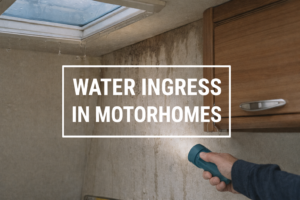
Damp becomes expensive because water enters through small failed seals, spreads behind panels or flooring, and damages materials long before the problem is obvious. That is what makes it different from a visible cosmetic issue. You are not only paying to stop the leak. You are paying to discover how far the moisture has travelled and what it has already compromised.
The mechanism is painfully simple. A seal, joint, rooflight, window surround, or body seam starts to fail. Water gets in during rain or standing weather.
Because the affected area is hidden, the motorhome continues to look serviceable while the moisture works away inside the structure. By the time you notice staining, softness, a musty smell, or unusual readings on a damp check, the repair may involve stripping back material, drying the structure, replacing damaged sections, and rebuilding finishes.
That labour stacks up quickly. Even the assessment stage can cost money, with damp reports or costing visits appearing around £90 to £119 before repair work starts. One UK specialist then quotes £90 an hour for damp repair work, while other motorhome workshops publish labour rates from £75 to well over £100 an hour. That is why a damp issue that looked like “just a seal” can turn into one of the most expensive jobs on the whole vehicle.
This is why damp has such a strong effect on value as well as maintenance cost. Buyers and professional purchasers do not only see the repair bill in isolation. They see uncertainty, hidden risk, and the possibility of future recurrence if the job is not done properly.
Which mechanical faults create the biggest shocks?
There are 3 mechanical repair groups that usually create the biggest budget shocks: drivetrain work, braking or suspension work, and major age-related component failure. The exact part names differ by chassis and age, but the financial pattern stays fairly consistent.
Drivetrain work tends to hurt because labour and parts costs stack up quickly once you move beyond routine servicing. Braking and suspension work can also escalate because the weight of the motorhome makes these systems too important to compromise on. Then there is the broader category of age-related failure, where components do not fail because you did one obvious thing wrong, but because enough years, miles, standing time, or previous neglect have collected in one place.
This category is also where vehicle class matters most. The bigger and heavier the motorhome, the harder a mechanical problem can hit the budget. That is one reason a larger older motorhome needs a wider reserve than a smaller van conversion, even if both seem affordable to buy.
Which appliance, heating, or electrical failures hit hardest?
There are 4 living-area failures that often hit hardest: fridge faults, heating or boiler failures, charging-system faults, and wider electrical issues. These categories matter because they sit in the grey area where the vehicle can still drive, but the cost and inconvenience are serious enough to change how you feel about ownership.
Heating-system and boiler faults are rarely cheap in practice because diagnosis and parts can be specialist. Fridge failures create the same issue. Electrical faults can be even more frustrating because a seemingly small symptom may trace back to a wider charging or control problem. If the motorhome has extra specification, that can increase both the time needed to diagnose the fault and the size of the invoice that follows.
The financial lesson is clear. The more a problem sits at the intersection of habitability, safety, and specialist labour, the more likely it is to push the year into the expensive band.
What costs are not maintenance but still affect your yearly motorhome budget?
Maintenance is only one part of annual motorhome running costs; storage, insurance, fuel, cleaning, campsite fees, and depreciation sit alongside it but should not be confused with it. If you blur the line, you make the topic harder than it needs to be, because you lose sight of which costs are controllable through better upkeep and which ones simply come with the ownership model you have chosen.
Maintenance is the money you spend to keep the motorhome serviceable, safe, and watertight. Storage is what it costs you to keep it somewhere. Insurance is the price of cover. Fuel is usage.
Site fees are travel lifestyle. Depreciation is market movement over time. All of them matter, but they answer different questions.
The 7 cost categories below keep the categories clean.
| Cost category | Is it maintenance? | Why it matters |
| Base vehicle servicing, habitation checks, repairs, tyres, batteries | Yes | Keeps the motorhome roadworthy, habitable, and in sound condition |
| Storage | No | Changes total yearly ownership cost and can influence condition |
| Insurance | No | Protects against loss but does not maintain the vehicle |
| Fuel | No | Usage cost rather than upkeep cost |
| Cleaning / washing | Partly | Cosmetic care can support condition, but routine cleaning is not the same as maintenance planning |
| Campsite fees | No | Travel-cost category, not upkeep |
| Depreciation | No | Value loss over time, but strongly affected by visible condition and history |
This distinction matters for decision-making. If your total motorhome spend feels too high, maintenance may be only part of the problem. If you are paying for storage, insurance, fuel, and site fees on top of growing repairs, the question can change from “How do I reduce maintenance?” to “Does this still make financial sense for how often I use it?”
Does renting avoid most ongoing maintenance exposure?
Yes, renting avoids most ongoing maintenance exposure because the ownership, repair, and replacement burden stays with the rental operator rather than the traveller. That does not mean renting is automatically cheaper in every situation. It means the cost profile is different. You pay for access rather than taking on the long-term upkeep of the vehicle yourself.
That comparison becomes relevant if you use a motorhome infrequently and dislike the idea of paying for storage, servicing, and age-related replacement cycles in the background. Ownership makes more sense when the flexibility, familiarity, and frequency of use justify the ongoing responsibility. Renting makes more sense when you want the trips without the reserve fund, repair anxiety, and value-retention questions that come with keeping a vehicle over time.
How should you build a monthly motorhome maintenance fund?
Building a motorhome maintenance fund depends on 3 variables: your vehicle type, its current condition, and the size of the irregular costs you need to spread across the year. If you leave all of that until the invoice arrives, the cost feels random. If you spread it properly, the same cost becomes manageable.
The numbers add up faster than many owners expect. A habitation service at £156 to £299 plus a mechanical service from around £229 already puts you at roughly £385 to £528 before a tyre, battery, damp, gas, or appliance bill appears. That is why a monthly reserve matters even in a year that feels quiet.
The 4 steps below are the simplest way to do it.
- Set a baseline monthly reserve. Start with a realistic monthly amount based on your motorhome type and age. A smaller, well-kept campervan-based model might justify a lower reserve, while an older coachbuilt or A-class unit needs more room from day one.
- Add replacement-cycle money on top. Tyres, batteries, and other larger items do not turn up every year, but they do turn up. Work out the likely future cost, divide it across the months, and add that amount to the baseline rather than pretending it is bad luck when it arrives.
- Review the fund after each service season. If the motorhome has started to show more wear, if damp readings are creeping up, or if several original parts are ageing together, increase the reserve before the expensive year finds you.
- Keep the fund separate from travel spending. If your maintenance reserve is mixed into holiday money, it becomes too easy to spend it on trips and hope the motorhome behaves.
For many owners, the most practical result is not one perfect number. It is a reserve that can handle the normal year calmly and the heavier year without forcing a rushed financial choice.
How can you keep motorhome maintenance costs down without cutting corners?
Keeping motorhome maintenance costs down depends on prevention, timing, and record quality rather than simply choosing the cheapest repair option. The 6 habits below do more to control long-term spend than bargain hunting after the damage is already done.
- Check for water ingress before it becomes a repair project. Rooflights, windows, seams, and external joints deserve regular attention because damp is one of the fastest ways to turn a small cost into a large one.
- Service the base vehicle on time, not when it becomes convenient. Regular engine and vehicle-side servicing is predictable, which is exactly why skipping it is such poor value.
- Treat tyres and batteries as sinking-fund items. If you budget for them monthly, their eventual replacement is annoying rather than destabilising.
- Store the motorhome in a way that protects condition. Good storage does not remove maintenance, but it can reduce UV exposure, standing damp risk, flat batteries, and weather-driven deterioration.
- Fix small faults while they are still small. A minor leak, weak battery, failing seal, or odd system behaviour is usually cheaper to deal with early than later. Even basic caravan-and-motorhome sealant products such as Sikaflex 522 often sit around £10 to £15 per tube, which shows how cheap the materials can be compared with the labour cost of full damp repair after delay.
- Keep organised records of what has been checked and replaced. Good records help with diagnosis today and support sale confidence later, which means they protect value as well as cost control.
Every one of these habits works because it reduces uncertainty. That is the real enemy of an affordable ownership year.
How to maintain your motorhome
Motorhome maintenance works best as a 5-step routine: inspect, clean, service, record, and review. If you keep those five actions moving, the vehicle stays easier to manage and the financial shocks become less frequent.
- Inspect it regularly. Check the roof, seals, windows, tyres, batteries, lights, and visible signs of damp before and after trips and during lay-up.
- Clean it with purpose. Cleaning is not only cosmetic. It helps you notice cracks, staining, soft areas, corrosion, and other early warning signs.
- Service it on schedule. Keep the base vehicle, habitation systems, and safety-related items aligned with time- and mileage-based requirements.
- Record the work. Keep invoices, reports, dates, tyre ages, battery details, and notes on any repairs or inspections completed.
- Review the next likely cost. Ask what is ageing, what is due, and what you need to fund next rather than only reacting to what has already failed.
This heading works best as a summary bridge. For day-to-day ownership, the deeper value is not in memorising a long list. It is in building a repeatable habit that keeps small problems visible.
How do maintenance costs affect motorhome value and value retention?
Maintenance affects value retention because buyers and professional motorhome buyers pay more confidently for a vehicle with fewer hidden risks and better evidence of care. Proper maintenance does not stop depreciation. Age still matters, mileage still matters, and the market still moves. What maintenance can do is limit the discount that uncertainty and visible neglect create.
That distinction is important. If two similar motorhomes are the same age, but one has patchy history, old tyres, unresolved damp concerns, and unclear repair records, the weaker one will usually be valued more cautiously. The issue is not only the cost of the next repair.
It is the fear of what else may be waiting behind it. That fear changes offers.
This is why upkeep matters even if you are already thinking about exit rather than long-term ownership. When you value your motorhome, you are not only asking what similar vehicles have sold for. You are also asking how much confidence your own vehicle creates.
Good maintenance supports that confidence. Clear condition evidence supports it further. Even basic record-keeping helps because it gives the next buyer, or a professional purchaser, something concrete to assess rather than guesswork.
In short, maintenance is one of the few ownership costs that can still protect you on the way out. You may not recover every pound you spend, but sensible care can preserve value better than neglect ever will.
Which maintenance records help you value your motorhome more accurately before sale?
There are 6 maintenance records that most improve motorhome valuation: service invoices, habitation reports, damp checks, MOT history, age evidence for major wear items, and repair receipts. Each one matters because it replaces uncertainty with evidence.
- Base vehicle service invoices. These show that routine mechanical care has been done on time rather than left to drift.
- Habitation reports. These help prove the living area has been inspected properly and give buyers or valuers more confidence in the condition behind the surfaces.
- Damp check records. These are especially valuable because damp is one of the biggest hidden-value risks in a motorhome.
- MOT history. This gives useful context on the vehicle side and helps build a cleaner picture of the motorhome’s overall upkeep.
- Tyre and battery age evidence. Dates matter here. A recent replacement can support confidence; an ageing set can justify a more cautious number.
- Repair receipts for significant work. These help prove what was fixed, when it was fixed, and whether the issue was addressed properly.
When you want a more accurate motorhome valuation, the goal is not to assemble paperwork for its own sake. The goal is to show that the vehicle’s condition is known rather than assumed.
When do rising maintenance costs mean it may be time to sell your motorhome?
Deciding whether to repair or sell your motorhome depends on repair size, recurrence, current condition, and how much value the next spend is likely to protect. There is no universal trigger point, but there is a recognisable pattern where more spending stops feeling like sensible upkeep and starts feeling like you are carrying too much future risk.
That pattern usually appears when the motorhome has moved beyond one isolated issue and into repeated pressure across several areas. You may have a bigger mechanical bill pending, damp concerns that still need attention, older tyres or batteries nearing replacement, and one or two habitation systems already showing their age. At that stage, the question is no longer, “Can I afford this one repair?” It becomes, “What else is lining up behind it?”
Selling can start to make sense when the next round of spending is unlikely to be matched by the value or use you expect to get back. That is especially true if your travel habits have changed, storage costs are still running, or the motorhome is becoming a source of uncertainty rather than enjoyment.
If you decide to sell your motorhome, good records and an honest view of current condition will help you make the decision from a position of clarity rather than frustration.
How can The Motorhome Trader help you value your motorhome and sell your motorhome when costs start to climb?
Motorhome owners usually seek valuation help when maintenance costs rise, condition starts affecting confidence, or they want to understand the market before deciding what to do next. That is where a realistic, evidence-based process matters more than guesswork.
If you want to value your motorhome, the useful starting point is not a vague online estimate. It is a proper look at specification, age, condition, service history, damp status, and the wider market for comparable vehicles. That is what turns curiosity into a practical motorhome valuation. Once you understand that number, you can judge whether more spending makes sense or whether it is the right time to move on.
For owners who no longer want the uncertainty of ongoing repair exposure, it also helps to understand how direct-purchase routes work. Some people compare private sale, part exchange, and Motorhome dealers that will buy your motorhome because each route asks for a different trade-off between speed, effort, and sale price.
The Motorhome Trader sits in that decision point as a buyer that purchases directly from owners, arranges collection, and handles the process in a more straightforward way than many sellers expect.
The point of this section is not that every owner should sell today. It is that once maintenance costs start to change how you feel about ownership, it is sensible to understand both the likely value of the vehicle and the practical routes available if you decide to act.
What else do owners ask about motorhome maintenance costs?
There are 7 common follow-up questions owners ask about motorhome maintenance costs. The answers below tighten up the most common sticking points that come up once the annual budget range is clear.
How much should you budget per month for motorhome maintenance?
A sensible monthly motorhome maintenance reserve usually sits between about £100 and £250, depending on the vehicle and how much irregular cost you want to smooth out. In practice, about £100 to £150 a month fits a smaller or simpler motorhome, £150 to £250 suits many used coachbuilt models, and £250+ starts to make more sense for older, larger, or more complex vehicles.
The important point is not the exact monthly number. It is whether your reserve can handle both the routine year and the tyre-or-repair year.
Do older motorhomes always cost more to maintain?
No, older motorhomes do not always cost more to maintain, because condition, service history, and previous repair quality matter more than age alone. A tidy older motorhome with strong records can be more predictable than a newer one with uncertain history, overdue maintenance, or signs of water ingress. Age increases risk, but poor condition increases it faster.
Are tyres a maintenance cost or a replacement cost?
Tyres are a replacement-cycle maintenance cost, which means they are not a small annual service item but they still belong in your maintenance reserve. You may not buy tyres every year, but you should budget for them every year because age, storage, and weight all affect when the next set is due.
Is a habitation service worth paying for?
Yes, a habitation service is usually worth paying for because it helps catch damp, safety, and system issues before they become more expensive. Even if the motorhome feels fine in use, the value of the service lies in finding what you have not noticed yet rather than confirming what you already know.
Can maintenance records improve resale value?
Yes, maintenance records can improve resale value because they reduce uncertainty about condition and show that the motorhome has been looked after. Records will not erase age or mileage, but they can support buyer confidence and reduce the discount that missing history often creates.
Should you fix damp before selling your motorhome?
Fixing damp before sale depends on the severity of the problem, the cost of the repair, and whether the work will materially improve sale confidence and value. A small, clearly documented repair may be worth doing. A larger issue may need a more careful decision based on likely recovery of the spend.
What matters most is not hiding it. It is understanding the real condition and making a financially clear choice.
Does storing your motorhome at home always save money?
No, storing your motorhome at home does not always save money, because outdoor exposure, limited security, and poor winter protection can create other costs. Home storage can reduce the cash you pay out each month, but if the storage setup increases weather damage or neglect, the saving may be smaller than it first appears.